

Battery Sun Covers: Protect Your Home Solar Battery From Australian Heat
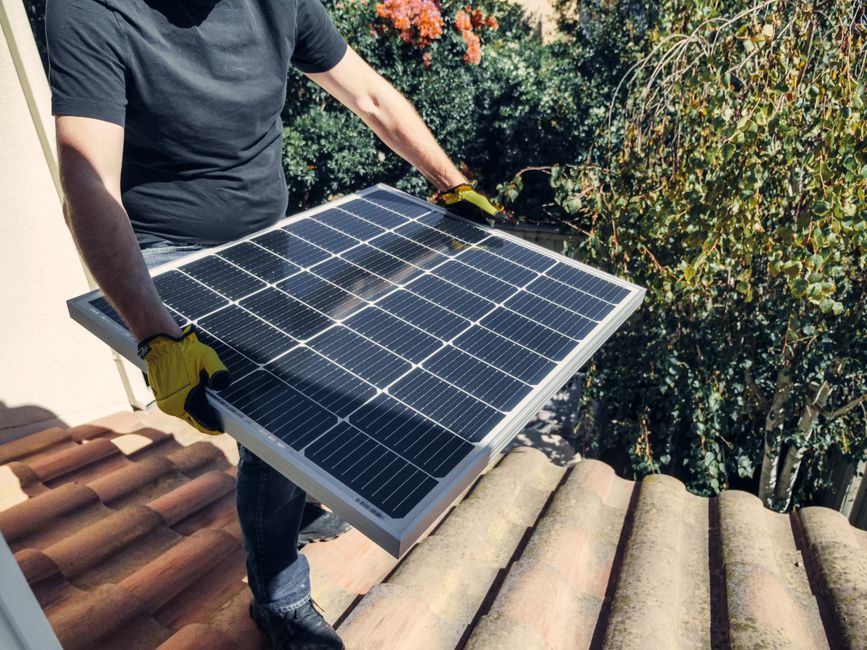
Photo by Kindel Media on Pexels
There is a quiet gap in many Australian solar installations. The panels get all the attention, while the battery hangs on an exterior wall and quietly copes with everything the climate throws at it: direct sunlight, summer heat, UV, wind and rain.
When a battery runs hot day after day, it can age faster. A simple battery sun cover can reduce unnecessary solar heat gain and help protect the investment you have already made in your home battery.
Battery sun covers — also called battery solar covers, solar battery covers or battery shade covers — are ventilated protective structures designed to shade outdoor batteries from direct sunlight and UV exposure. In Australian conditions, a correctly designed cover can reduce avoidable solar heat gain while maintaining the ventilation, access and manufacturer clearances the battery requires.
This article explains what battery sun covers do, why Australian conditions make them worth considering, what battery ageing research tells us about temperature, and what to check before choosing a cover.
What Australian Weather Does to an Outdoor Battery
Australia presents a demanding environment for outdoor battery equipment. High summer temperatures, strong solar radiation and prolonged UV exposure can combine to produce an enclosure temperature higher than the surrounding air temperature.
A battery mounted on a north- or west-facing wall can receive direct sunlight for hours. Its enclosure absorbs part of that solar radiation and converts it into heat.
That distinction is important.
Ambient air temperature is not necessarily the same as the temperature experienced by equipment sitting in direct sunlight.
The actual temperature of an outdoor battery enclosure can also be influenced by its colour and material, wall temperature, orientation, airflow, shading, local weather and heat generated internally by the battery itself.
Photo by Simon Gough on Pexels
UV exposure creates another long-term challenge for equipment installed outdoors. Wind, rain, moisture and airborne contaminants add to the environmental exposure.
An outdoor-rated battery may be designed to tolerate weather and specified environmental conditions, but an outdoor rating does not mean direct solar radiation has no thermal effect.
What a Battery Sun Cover Actually Does
A battery sun cover does not cool a battery like an air conditioner.
Instead, it addresses the problem at its source by intercepting direct solar radiation before it reaches the battery enclosure.
This reduces the additional radiant heat absorbed by the cabinet and can help keep the battery closer to the surrounding ambient temperature than it would be if exposed to direct sunlight.
A properly designed cover can also shield the exterior of the battery and associated equipment from direct UV and weather exposure.
But simply putting a box around a battery is not the answer.
A good battery solar cover needs to achieve three things:
- Shade — reduce direct solar radiation reaching the battery.
- Ventilation — allow internally generated heat to escape.
- Clearance — maintain the battery manufacturer's required space for cooling, servicing and access.
A poorly designed sealed enclosure can trap heat and potentially make the thermal environment worse.

Why Temperature Matters to Battery Life
Temperature is one of the important factors affecting lithium-ion battery ageing.
Peer-reviewed research covering commercially available lithium-ion chemistries has identified temperature and state of charge as important influences on calendar degradation. Battery chemistry matters, so different lithium-ion batteries do not necessarily age at the same rate under identical conditions.
Source: Calendar aging of commercial Li-ion cells of different chemistries – A review, Current Opinion in Electrochemistry.
https://doi.org/10.1016/j.coelec.2018.05.023
A separate review focused specifically on lithium-ion battery energy storage systems identifies temperature, state of charge, charge-discharge rate and cycling as external stress factors influencing degradation.
Source: Aging aware operation of lithium-ion battery energy storage systems: A review, Journal of Energy Storage.
https://doi.org/10.1016/j.est.2022.105634
The Arrhenius Relationship and Battery Ageing
Temperature-dependent battery ageing is often modelled using relationships based on Arrhenius behaviour, which describes the temperature dependence of chemical reaction rates.
The important point for a homeowner is that battery ageing does not necessarily increase by a simple fixed percentage for every degree of additional temperature.
Battery chemistry, state of charge, cycling, internal battery controls and the particular ageing mechanism all influence the result.
What the research does establish is that temperature is an important battery ageing stress factor.
That does not mean installing a battery cover automatically adds a particular number of years to battery life or doubles its lifespan.
Actual battery life depends on chemistry, cycling, state of charge, battery-management strategy, internal cell temperature, manufacturer design and operating conditions.
The engineering principle is much simpler:
Do not unnecessarily add heat to an expensive battery.
If direct sunlight is causing an outdoor battery enclosure to operate above ambient temperature, removing that solar heat gain removes one avoidable contributor to its thermal environment.
Photo by RDNE Stock project on Pexels
What Does the Published Battery Research Show?
The broader battery literature consistently identifies elevated temperature as an important consideration in lithium-ion ageing.
A review of approximately two decades of published calendar-ageing research examined commercial lithium-ion cells using several cathode and anode chemistries, including LFP, NMC, NCA and LCO systems. It found that temperature and voltage strongly influence calendar degradation, while the magnitude of the effect depends on battery chemistry.
For stationary battery energy storage systems, the same principle applies: temperature is one of several external stress factors that influence degradation alongside state of charge, depth of cycling and charge-discharge rate.
For consumers wanting a more accessible explanation, Battery University also publishes illustrative lithium-ion storage data showing substantially greater capacity loss at elevated temperatures, while appropriately cautioning that not all lithium-ion systems behave identically.
Further reading: Battery University — How to Prolong Lithium-based Batteries
https://batteryuniversity.com/article/bu-808-how-to-prolong-lithium-based-batteries
The takeaway is not that every battery will experience exactly the same degradation.
It is that avoidable heat is not beneficial to lithium-ion battery longevity.
Australian Batteries Have Another Heat Source: The Sun
Battery ageing studies generally consider battery or cell temperature. An outdoor residential installation introduces another issue before the battery's own internal thermal management even enters the equation: solar heat gain through the enclosure.
Strong sunlight striking an enclosure transfers additional energy into it.
That is why an outdoor battery can experience a different thermal environment from a battery operating in shade even when both locations have exactly the same reported ambient air temperature.
A solar battery cover targets this particular source of heat.
It does not change the Australian summer temperature.
It does not change the heat generated internally when the battery charges and discharges.
It simply seeks to prevent unnecessary additional solar radiation from directly heating the equipment.

North-Facing vs West-Facing Battery Installations
In Australia, north- and west-facing installations deserve particular attention.
North-facing walls can experience extended solar exposure through the day.
West-facing installations can also be challenging because they receive strong afternoon sunlight at a time when ambient temperature and the surrounding building structure may already be near their daily maximum temperature.
The actual exposure will depend on the individual property, season, latitude, neighbouring buildings, vegetation and other sources of shade.
A simple test is to look at your battery during the hottest part of a clear summer afternoon.
If direct sunlight is falling on the battery enclosure, that solar radiation represents a thermal load that could potentially be reduced through shading.
What Makes a Good Battery Sun Cover?
There is no single cover design that suits every battery installation.
Common approaches include marine-grade aluminium covers, ventilated slatted enclosures, powder-coated structures and simpler purpose-built shade systems.
Whatever the design, the important characteristics are similar.
Ventilation
The battery must still be able to reject its internally generated heat.
A cover should provide shade without creating a sealed hot box around the equipment.
Manufacturer Clearances
Every battery has installation requirements specifying clearances around the enclosure.
The cover needs to work around those requirements rather than simply being fitted as closely as possible around the battery.
Always check the manufacturer's current installation instructions for your particular battery.
Access
Isolators, displays, switches, cabling and other service points must remain accessible.
A cover should not turn a straightforward maintenance task into a dismantling exercise.
Outdoor Materials
Materials need to suit the installation environment.
Marine-grade aluminium can be particularly useful in coastal areas because of its corrosion resistance, while appropriately finished steel and other weather-resistant materials may suit other locations.
Appearance
For many homeowners, the battery is mounted in a highly visible location.
A properly designed architectural cover can protect the equipment while also screening cabling, isolators and other components that can otherwise make a residential battery installation look industrial.
Photo by Terrance Barksdale on Pexels
DIY or Purpose-Built Battery Cover?
A DIY shade structure can work.
The fundamental thermal principle is straightforward: stop direct sunlight from striking the battery while maintaining adequate airflow and the manufacturer's required clearances.
Homeowners have used aluminium louvres, shade cloth and fabricated frames to achieve this.
The difficulty is getting all the details right.
A poorly designed DIY cover can restrict ventilation, interfere with access to isolators or servicing, or sit too close to the equipment.
Purpose-built covers cost more, but they can be designed around the dimensions, ventilation and practical access requirements of battery and inverter installations.
For a home battery system representing thousands — or tens of thousands — of dollars of investment, protecting it from unnecessary environmental exposure can be a relatively modest additional expense.
A Purpose-Built Solution for Australian Conditions
Battskin developed the Battskin Sunshield specifically to provide solar and environmental protection for battery and inverter installations while retaining the airflow and practical access the equipment requires.
Rather than sealing the battery inside another box, the objective is to create a protective external barrier between the equipment and Australia's demanding solar environment.
The Sunshield uses a clean architectural design intended to complement a home rather than make the battery installation look like industrial equipment.

Battskin Sunshield — purpose-built solar protection for residential battery and inverter installations.
Protect Your Battery Before the Next Australian Summer
If your battery is installed outside — particularly on a north- or west-facing wall — look at where the sun falls on it during the hottest part of the afternoon.
If the enclosure is sitting in direct sunlight, that is additional solar heat your battery does not need.
The Battskin Sunshield provides a purpose-built way to shade and protect outdoor battery and inverter installations while maintaining ventilation and practical access.
For installations where appearance is just as important as protection, the Battskin Sunshield Premium combines solar protection with a more architectural enclosure.

What to Check Before Buying a Battery Sun Cover
Before choosing a battery solar cover, check:
- The battery manufacturer's required clearances.
- Whether the cover provides adequate natural ventilation.
- Access to isolators, displays, switches and wiring.
- The dimensions of your particular battery or battery stack.
- Whether the material suits your local environment.
- How the cover will be mounted without compromising the original battery installation.
- Whether additional battery modules may be installed in future.
Most importantly, consider the actual location.
A battery permanently installed in a cool garage or deep shade may gain relatively little from additional solar protection.
A battery receiving several hours of direct Australian summer sun is a very different proposition.
Frequently Asked Questions About Battery Sun Covers
What Is a Battery Sun Cover?
A battery sun cover — also called a battery solar cover or solar battery cover — is a ventilated protective structure designed to shade an outdoor battery from direct sunlight and UV exposure while maintaining required airflow, access and manufacturer clearances.
Are Battery Sun Covers Worth It?
For an outdoor battery receiving significant direct sunlight, a properly designed cover can reduce unnecessary solar heat gain and UV exposure.
Whether a cover is worthwhile depends on the battery location, orientation, existing shade, local climate and the battery manufacturer's installation requirements.
Can a Battery Sun Cover Extend Battery Life?
Potentially, where the cover produces a meaningful reduction in sustained battery operating temperature.
Peer-reviewed research identifies temperature as an important stress factor in lithium-ion battery degradation. However, it is not possible to state that a cover will extend every battery's life by a particular number of years because degradation also depends on chemistry, cycling, state of charge, controls and battery design.
Can I Build My Own Battery Sun Cover?
Yes.
A DIY structure can provide effective shade, but it needs to be secure, weather-resistant and ventilated. It must also maintain the battery manufacturer's required clearances and access to isolators, displays and wiring.
Do Battery Covers Block Necessary Ventilation?
A badly designed one can.
A good battery cover provides shade while allowing internally generated heat to escape. Avoid designs that completely seal the battery inside another enclosure unless that enclosure has been specifically engineered for the equipment.
Does an Outdoor-Rated Battery Still Need Protection From the Sun?
Outdoor rating and solar heat gain are different issues.
An outdoor-rated battery may be designed to tolerate rain, dust and specified environmental conditions. Direct sunlight can still add solar heat to the enclosure.
Always follow the battery manufacturer's installation instructions and environmental limits.
Which Side of a House Is Most Important?
In Australia, north- and west-facing installations deserve particular attention.
West-facing walls can receive strong afternoon solar radiation when ambient temperature and the surrounding building structure may already be near their daily maximum temperature.
Actual exposure depends on the individual property and local shading.
Where Can I Buy a Battery Sun Cover in Australia?
Battskin produces purpose-built battery and inverter protection systems for Australian installations.
The Battskin Sunshield provides practical solar and environmental protection, while the Battskin Sunshield Premium is intended for installations where an architectural finish is also important.
Protect the Battery You Already Own
Australia is an ideal environment for rooftop solar, but the same sunshine that makes solar generation so effective can create an unnecessarily harsh environment for electrical equipment mounted outside.
A battery sun cover cannot change the ambient temperature, and it cannot prevent every form of battery degradation.
What it can do is straightforward:
Reduce direct solar radiation reaching an expensive piece of battery equipment while maintaining the ventilation and access it requires.
For a home battery expected to operate for many years, reducing avoidable environmental stress is a simple form of protection worth considering.

Designed in Australia for battery and inverter installations exposed to Australia's demanding outdoor environment.
About the Author
Dr Ian Boake, CPEng, FIEAust, MEng, MBA is an electrical engineer with more than 30 years of experience across power systems, energy storage, generation and grid-connected energy systems. He is involved in Battskin's development and field testing of thermal-protection solutions for residential battery systems.
Technical Sources and Further Reading
Dubarry, M., Qin, N. & Brooker, P. (2018). Calendar aging of commercial Li-ion cells of different chemistries – A review. Current Opinion in Electrochemistry, 9, 106–113.
https://doi.org/10.1016/j.coelec.2018.05.023
Collath, N., Tepe, B., Englberger, S., Jossen, A. & Hesse, H. (2022). Aging aware operation of lithium-ion battery energy storage systems: A review. Journal of Energy Storage, 55, 105634.
https://doi.org/10.1016/j.est.2022.105634
Battery University. BU-808: How to Prolong Lithium-based Batteries.
https://batteryuniversity.com/article/bu-808-how-to-prolong-lithium-based-batteries
